
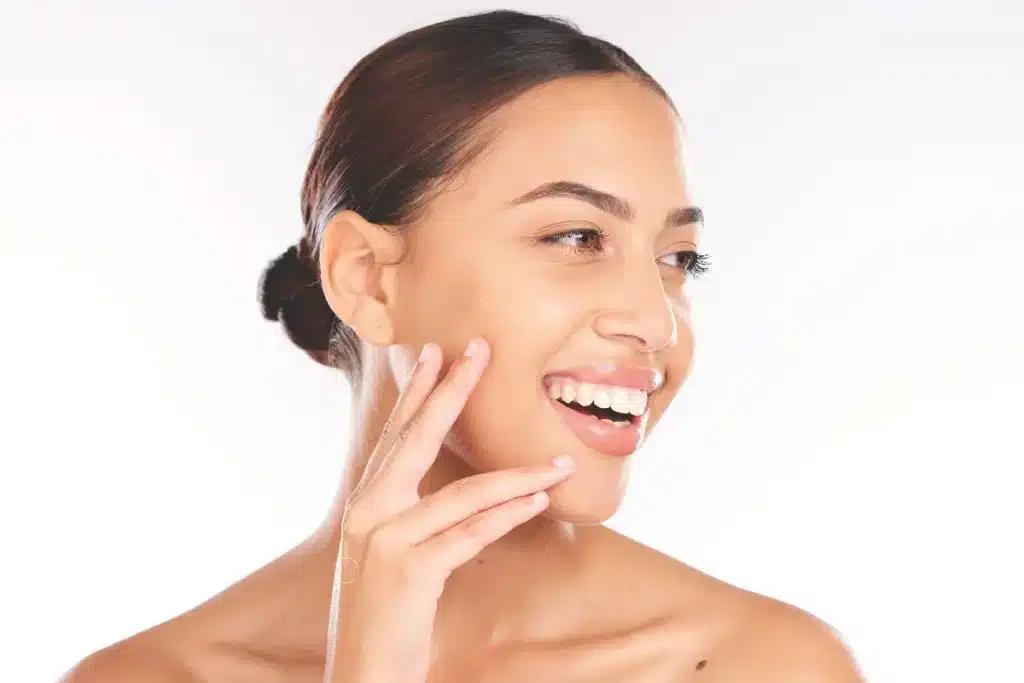
There was once a time when beauty culture was defined by layers. Layers of primer, foundation, concealer, setting powder, bronzer, blush – all stacked like armor before stepping out into the world. The ritual was not just about looking polished; it was about proving worthiness through perfection. For decades, makeup was the badge women wore to say, “I belong. I am enough.”
But a quiet revolution has been building. It has been seen through barefaced selfies, the rise of the “no-makeup makeup” trend, and the unapologetic decision to show freckles, fine lines, and natural skin texture online. Social media, once blamed for fueling comparison culture, has also become the stage for vulnerability – where women peel back the filter and present themselves as they are.
For licensed skin professionals, this shift matters. It is a cultural reset, not simply a passing trend. Skin is no longer the beauty background, and in this new era, professionals have the opportunity to lead, educate, and position themselves as the architects of confidence, helping clients love the skin they are in without relying on makeup as a mask.
THE CONSUMER MINDSET
The Call for Authenticity
In this day and age, authenticity has more value than perfection. “Instagram face” is losing its grip. Clients want to see real skin. They want to see pores, texture, and even the quirks that make them human. They crave transparency in beauty because they are seeking transparency in life.
The Influence of Wellness Culture
Wellness is no longer a niche market – it is mainstream. Meditation apps, green juice bars, infrared saunas, and yoga classes are as prevalent as fast food. The conversation about beauty has shifted from “how do I look” to “how do I feel?” Clients are making the connection between skin health, diet, stress, hormones, and mental health. They are beginning to understand that radiant skin is a reflection of overall well-being, and they want their outward glow to match their inner alignment.
Skinimalism & the Power of Less
“Skinimalism” has become the beauty mantra of the moment. Fewer steps, cleaner formulas, and results-driven products are in demand. It is not about the 12-step routine anymore but about simplicity that works. Clients want skin care that feels like self-care, not homework. They want efficiency, but they do not want to sacrifice results.
Post-Pandemic Priorities
The pandemic redefined routines. With Zoom calls replacing boardrooms and face masks covering complexions, makeup sales dipped while skin care sales skyrocketed. People had more time to focus on skin health, and many never looked back. That period created a permanent shift. Makeup became optional, while skin care became essential.
Generational Impact
Gen Z is rewriting the rules. They are skipping foundation altogether, embracing bare skin, and proudly showing texture on TikTok. They are calling out unrealistic beauty standards and driving the demand for brands – and professionals – who support authenticity. Millennials and Gen X, while raised in a makeup-first culture, are following suit. They are craving freedom from heavy coverage and finding empowerment in showing up makeup-free. These shifts in consumer priorities are not just interesting observations; they are calls to action for every skin professional ready to lead the beauty conversation.
THE PROFESSIONAL OPPORTUNITY
When makeup dominated, makeup artists held the keys to beauty transformation. Today, that duty has been shared with skin professionals. Instead of brushes and palettes, they wield serums, peels, and LED light tools. They are not painting on confidence but cultivating it at the cellular level.
This is the professional’s moment to position their services as the new foundation. Healthy, glowing skin is not just preparation, it is the main event. Instead of being reactive (treating acne scars, hyperpigmentation, or dullness after years of camouflage), professionals can shift to proactive care, helping clients maintain radiant skin so they never feel the need to hide.
The power of this shift is simple. Makeup comes off every night. Skin results do not. Clients are realizing that the confidence they feel when they wake up with glowing skin is worth more than any temporary coverage. For professionals, this means upselling services as beauty preparation, not correction, educating clients on long-term results versus quick fixes, and becoming the trusted authority in a world that is craving honesty.
And the best part? Confidence is contagious. When clients start experiencing makeup-free confidence, they tell their friends, their coworkers, and their families. Word-of-mouth becomes the best marketing tool, powered by the results created.
FINE TUNING
To thrive in this skin-first culture, service menus cannot read like generic checklists. They must be positioned as pathways to transformation, curated journeys that prepare clients for their new confident role. Every treatment should not be presented not as a stand-alone service but as part of a bigger lifestyle shift.
This is where language matters. Stop selling “a facial” and start selling makeup-free confidence. Reframe treatments as rituals that prepare skin to perform at its best, the way a personal trainer prepares the body to perform at its peak. When a client books a peel, they are not buying exfoliation; they are buying the courage to walk into a boardroom, gym, or first date with nothing but moisturizer and sunscreen.
Bare-Skin Treatments
Hydrating facials deliver the plump, dewy finish that once required layers of highlighter. Position them as hydration infusions, essential for that effortless glow. Chemical exfoliation and peels are the new complexion reset. This is not just for correction but for clients who want a consistently bright, camera-ready canvas. LED Light Therapy can be presented as skin’s personal recharge session – soothing inflammation, healing acne, and energizing cells for radiance that no powder compact could ever deliver. Microneedling and collagen stimulation are time-defiers. Instead of covering fine lines, clients are building stronger, smoother, more youthful skin that lasts. Finally, pigmentation management is more than brightening – it is liberation, helping clients erase the shadows of the past (acne scars, sun damage, or hormonal spots), so they can step into the world unfiltered.
LOVE ON TOP
The key is not just offering treatments individually but creating strategic combinations that address multiple concerns at once. Rarely does a client have only one skin challenge. Often, they are dealing with a layered story – pigmentation tied to past breakouts, dehydration that exaggerates fine lines, or texture changes paired with sensitivity. This is where customization sets licensed professionals apart.
Think of it as building a symphony rather than playing a single instrument. A client struggling with dullness and breakouts might benefit from a peel plus an LED series to resurface and calm simultaneously. Someone with texture and pigmentation may thrive with microneedling to stimulate collagen combined with targeted topicals to regulate melanocyte activity. Even a simple hydrating facial can be elevated by layering in lymphatic drainage, enzymes, or LED to extend the glow beyond the treatment room.
Customization also allows professionals to sequence care intelligently. For example, beginning with corrective treatments like chemical peels or pigment protocols, then transitioning the client into restorative treatments such as hydrating facials or LED once progress is visible. This phased approach not only maximizes results but also gives clients a clear roadmap, building their trust as they see their evolving skin needs anticipated by their provider.
THE MAIN EVENT
The bare-skin trend is also a golden retail opportunity. When clients skip foundation, they are not saving money, they are reallocating it. The dollars once spent on makeup products can now fund their skin health journey. Skin care retail is no longer an add-on. It is the main event. Licensed professionals can build personalized at-home programs that function like “makeup replacement kits.” Bundling cleansers, serums, and sunscreen as a system not only ensures results but reframes the spend. When clients invest in their skin, they offset what they would have spent on endless tubes of foundation and concealer.
LINES OF COMMUNICATION
The way professionals talk to clients can either keep them stuck in makeup dependency or help them embrace the new skin-first era. Words are powerful; they frame the relationship a client has with their reflection. When the focus is on flaws, clients feel the need to cover. When the focus is on radiance, they feel empowered to reveal. That subtle but intentional shift in language changes how they see themselves.
Education is not just about explaining products or treatments, but about reframing beauty altogether. For some clients, makeup has been their safety net for years – a way to hide hyperpigmentation, acne, or scarring. Removing that safety net takes trust. That trust is built in the way professionals educate. This is done by breaking down complex skin science in simple terms, celebrating small wins in their progress, and reminding them that lasting results take consistency.
Client communication in this era also extends beyond the treatment room. Social media, newsletters, and even quick text reminders all become touchpoints of education. When a service provider posts a reel showing the glow from a hydrating facial or shares a before-and-after pigment journey, they are reshaping beliefs. They are showing their community that healthy skin is attainable and sustainable, not just a privilege of genetics or expensive products.
Guiding clients into makeup-free confidence requires a gentle hand. Instead of telling them to ditch makeup, invite them to test the waters. Over time, those small steps build confidence, and that confidence becomes the story they tell about themselves.
When skin professionals master this level of education and communication, they stop being service providers and start becoming mentors. They do not just sell treatments; they create transformations that ripple through a client’s lifestyle, confidence, and even their relationships with others.
BUSINESS BENEFITS
When professionals reposition skin care as the new makeup, they both change a client’s routine and change their business model. Results-based care compounds over time, producing steadier revenue, stronger retention, and a brand reputation that sells itself.
Compounding Loyalty & Lifetime Value
Clients who experience makeup-optional confidence do not shop around; they recommit. Shift the relationship from “fix me” to “guide me,” and lifetime value rises naturally. Keep it simple; consistent results mean consistent renewals. Think in programs and series, not one-offs, and measure lifetime value as average order value by purchase frequency by lifespan.
Predictable Recurring Revenue
Prebook maintenance (four to eight weeks), build memberships with clear entitlements, and set auto-replenish homecare cycles for six to eight weeks. The more cadence is anchored, the more predictable a month becomes, even in slow seasons.
Pricing Power & Premium Positioning
When clients link their service provider to their best skin, the professional can confidently price for expertise, not minutes. Bundled protocols increase acceptance and reduce discount pressure because the outcome is the offer.
Capacity Clarity
A stable base of members and prebooked clients lets professionals forecast hours, reserve peak slots for high-value services, and fill gaps with waitlist automations. Predictability reduces burnout and creates room for education, content, and chief care.
Risk Diversification
Balanced revenue (services, retail, memberships, and virtual consults) protects cash flow. If one stream dips, replenishments and programs keep the business afloat.
Data-Driven Follow-Ups
Use simple tags (concern, tone, and treatment stage) and run 30-, 60-, and 90-day check-ins. “You are due for your LED boost!” or “Refill ready for your tinted SPF?” keeps progress on track and reduces lapses.
Partnerships That Amplify
Align with makeup artists, nutritionists, or wellness studios, and dermatologists for co-managed cases. Shared credibility expands reach without paid ads.
CLOSING THOUGHT
Skin is rewriting the rules of beauty. For decades, women were told to cover, correct, and conform. The industry profited off insecurities, selling foundation as a mask and concealer as salvation. But today, that era is not so strong. The new standard is not about perfection; it is about presence.
Skin care is the revolution. It is the new makeup, the new confidence, the new liberation. And licensed professionals do not just offer treatments, but freedom. Freedom from hiding. Freedom from filters. Freedom from waiting until clients are “fixed” to feel worthy. When touching a client’s skin, professionals are giving them permission to show up boldly, fully, and unapologetically themselves.
Skin professionals are not in the business of facials. They are in the business of transformation. They are not just service providers; they are architects of self-belief. When clients leave a professional’s care, they do not just glow; they evolve. This is not the end of makeup; it is the rebirth of beauty on our terms.

Victoria (Tori) Prince is an award-winning aesthetician, author, international skin of color expert, speaker, and business coach. As the founder of Tori Prince Beauty, she specializes in corrective skin care solutions for women of color and leads advanced education programs for licensed professionals. A published contributor and sought-after keynote speaker, Prince is known for blending skin science with empowerment, helping both clients and aestheticians embrace skin health as the new beauty standard. She is dedicated to shaping the future of inclusive, results-driven aesthetics.
No comments yet. Be the first to comment!





0 Comments