

Menopause has been treated like a quiet inconvenience for far too long – spoken about in hushed tones, brushed aside, or, worse, dismissed outright. Yet this stage of life affects every woman profoundly. For decades, women have shared how their fatigue, pain, dryness, brain fog, or unexpected skin and hair changes were minimized or misunderstood, and those experiences can deeply impact their confidence. In some areas of medical training, there were even casual acronyms used to label these women: “whining woman,” “whiny gynies,” “madame Dolores,” “total body dolor.” These were not harmless slang; they were signs of a culture that refused to take women’s bodies, or their voices, seriously. And when a woman’s symptoms are minimized, she is minimized.
Thankfully, the tide is turning. Women today are insisting on answers. They are advocating for their health. They are refusing to carry shame about a biological transition that deserves respect, research, and real support. And as these conversations grow louder, the beauty, wellness, and aesthetics industries must grow with them. Menopause represents one of the greatest unmet needs in the beauty and skin health world today. The demand is enormous, the challenges are real, and the women seeking solutions are not only ready to invest, but they are also grateful to finally be seen.
This is professionals’ opportunity to rise to the moment: to educate themselves, offer genuine expertise, and stand beside women as they navigate one of the most transformative stages of their lives. This is where meaningful care meets meaningful impact – and where professionals have the chance to become truly indispensable.
GROWING FORCE
Far from a niche demographic, women in midlife represent one of the most powerful consumer groups in the wellness and aesthetics sector. They have the financial resources, the willingness to invest in quality services and self-care, and the desire to partner with professionals who truly understand the complexities of hormonal skin.
The global menopause wellness market is projected to exceed $24 billion by 2030, and that number continues to rise as stigma fades and education spreads. Women entering perimenopause today do so with vastly different expectations than the generations before them. They want targeted, evidence-informed care that acknowledges their physiology, respects their experience, and offers practical solutions.
Yet despite this enormous demand, few skin professionals speak directly to this demographic. Menopausal women often find themselves cobbling together information from social media, blogs, and chance conversations, trying to decode symptoms that vary widely from person to person. Many do not know where to turn for trustworthy, skin-focused guidance tailored to their stage of life.
This gap is not merely a missed opportunity – it is an open invitation. Professionals who embrace menopausal skin education and care can position themselves as leaders in one of the fastest-emerging sectors of modern aesthetics.
MARKERS OF MENOPAUSE
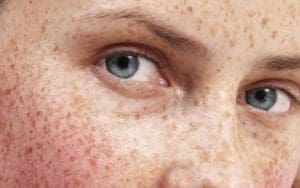
Menopause is a biological progression that influences every layer of skin. As estrogen, progesterone, and testosterone fluctuate, the complexion undergoes significant physiological shifts. For many women, these changes arrive unexpectedly: Skin that was once oily becomes parched, breakouts appear where they have not in decades, and familiar products suddenly irritate skin.
There are four primary concerns practitioners consistently see in menopausal clients: dryness, loss of firmness, sensitivity, and textural changes. Understanding these shifts is essential for providing safe, effective, and empathetic care.
Accelerated Dryness & Dehydration
As estrogen declines, skin’s ability to hold moisture decreases significantly. Lipid production slows, the barrier weakens, and transepidermal water loss accelerates. Even women who once struggled with oiliness may find themselves experiencing tightness, flakiness, or sudden sensitivity. Estrogen plays a crucial role in stimulating collagen, hyaluronic acid, and sebum production. When levels fall, skin loses both water and oil, creating a dual deficiency that affects texture, radiance, and comfort.
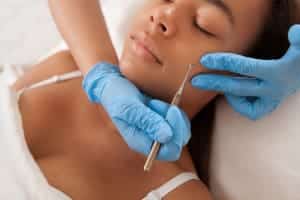
Professional treatment options for dryness focus on restoring hydration, supporting barrier function, and promoting long-term skin health rather than aggressive exfoliation. Hydrating facial infusions use professional-grade humectants, ceramides, and barrier-repair complexes to replenish moisture at multiple levels, emphasizing slow, layered hydration. Dermal biostimulation, in the form of hydrating boosters in medical spa settings, enhances moisture and plumpness from within, providing lasting benefits beyond topical care. Red and near-infrared LED light therapy supports cellular repair, improves barrier resilience, and aids moisture retention, making it ideal for individuals with chronic dryness. By addressing dryness early and thoroughly, professionals can deliver relief while supporting ongoing skin health.
Loss of Firmness & Elastin Breakdown
Among the most visible changes in menopausal skin is a decline in firmness. This can manifest as sagging along the jawline, deeper folds around the mouth, and an overall loss of contour. Estrogen is a major regulator of collagen and elastin synthesis. When its signaling decreases, cells responsible for structural integrity slow down, resulting in weakened support and diminished elasticity.
Professional treatment options for firming and lifting skin focus on stimulating collagen and supporting structural integrity. Radiofrequency skin tightening uses energy to heat the deeper layers of skin, promoting collagen and elastin production over time. This process helps firm lax tissue and redefine facial contours. Microneedling, also known as collagen induction therapy, creates controlled micro-injuries that activate fibroblasts, encouraging new collagen formation and improving overall skin firmness. Ultrasound lifting treatments deliver energy to deeper facial layers, supporting long-term tissue remodeling and structural improvement. These approaches can be enhanced with topical peptides, growth factors, or post-procedure hydration to amplify and prolong results.
Thinning Skin & Increased Sensitivity
As the epidermis becomes thinner and the barrier weakens, menopausal skin often becomes more reactive. Products that were once well-tolerated may suddenly cause tingling, redness, or irritation. Hormonal fluctuations disrupt ceramide production and reduce natural oil secretion. These changes compromise the barrier’s ability to keep irritants out and moisture in, leaving skin more vulnerable to inflammation.
Professional Treatment Options
Barrier-rebuilding facials focus on strengthening and calming compromised skin. Treatments featuring ceramides, fatty acids, omega-rich oils, and soothing botanicals help restore skin’s natural barrier while providing comfort and nourishment. Non-ablative lasers or gentle light therapy use infrared or low-intensity energy to improve elasticity and resilience without triggering inflammation. Manual lymphatic drainage or gentle facial massage supports circulation, reduces inflammation, and enhances skin’s natural repair processes. At this stage, the focus should remain on reinforcing and soothing the skin rather than over-stimulating it.
Texture Changes, Roughness & Dullness
Declining hormones slow cell turnover, causing dullness, buildup, and uneven texture. Combined with dryness, this often causes makeup to sit unevenly or accentuate lines. Keratinocyte renewal slows with age, and fluctuating hormones exacerbate this decline. Without intervention, dead skin cells accumulate on the surface, dulling the complexion.
Professional treatment options for restoring radiance focus on exfoliation that protects skin’s barrier while improving texture and clarity. Gentle enzymatic exfoliation or lactic peels revive luminosity and smooth skin without causing irritation. When performed cautiously, microdermabrasion softens roughness and stimulates cell turnover, providing a gentle boost to renewal. For more intensive results, controlled resurfacing lasers refine texture and enhance clarity. Balancing exfoliation with deep nourishment is essential to restore radiance while maintaining the integrity of vulnerable skin.
THE BUSINESS CASE
Professionals who position themselves as menopause-informed experts stand to gain not only from increased demand but from long-term loyalty. Midlife clients are discerning, research-driven, and committed to investing in their well-being. They value credibility, education, and a personalized approach. Yet, very few businesses speak to them directly.
Speaking directly to her needs demonstrates a clear understanding of her journey. Offering services such as hormonal skin support or menopause-focused rejuvenation signals that the business is attuned to her unique concerns. Educating and connecting through workshops, livestreams, or informational posts about skin changes during menopause builds trust and positions professionals as knowledgeable guides.
Partnering with healthcare practitioners, including local obstetrician-gynecologists, nurse practitioners, or functional medicine clinics, allows for collaborative events or complementary care, reinforcing credibility while remaining within professional scope.
Personalized consultations that address lifestyle, hormonal shifts, sleep, stress, and skin care provide a holistic approach that sets professionals apart from service-only providers. Developing a recognizable voice through consistent education, support, and guidance further strengthens trust and encourages clients to gravitate toward expertise.
WHO SHE IS TODAY
Women in midlife are experienced, informed, and value driven. They are not seeking “antiaging miracles.” She wants skin confidence, energy, and vitality that makes her feel like herself. Menopause can bring both emotional and physical changes, and she is looking for professionals who truly understand and respect that.
To connect with her, focus on education, trust, and transparency. Take the time to explain why certain treatments are being recommended, show her what she can expect, and answer her questions with empathy. She wants a relationship, not a rushed appointment. When professionals honor that, loyalty grows naturally.
THOUGHTFUL DESIGN
Menopausal skin requires considerate, nuanced care. Many existing treatments can be adapted to suit midlife clients simply by modifying technique, product selection, or frequency.
Adapt Existing Services
Emphasize hydration, repair, and regeneration. Consider richer masks, gentle exfoliation, barrier-supportive serums, calming modalities, and hydration boosters. It is not about reinventing one’s menu, but about tailoring it thoughtfully.
Create Structured Treatment Plans
Encourage long-term engagement by creating structured packages that guide clients through multiple sessions. For example, a “Skin Revival Plan” could include a monthly facial with hydration boosters, combined with at-home care recommendations. Packages like these help clients see cumulative results and build trust in the professional’s expertise, making it easier for clients to commit and return consistently.
Position Expertise Over Discounts
Menopausal clients value knowledge, results, and confidence, not gimmicky promotions. Take time to educate them about their skin, explain why certain treatments work best for their stage of life, and provide personalized guidance. When clients feel understood and supported, retention increases naturally. Focus on the transformative experience rather than short-term savings.
THE A-TEAM
Partnerships are not just smart; they are a way to build credibility and expand client offerings.
Team Up Strategically
Do not partner just for the sake of it. Seek out nurse injectors, hormone specialists, dermatologists, or plastic surgeons whose values align. Cross-referrals work best when everyone respects each other’s expertise.
Offer Complementary Care
After treatments like microneedling, biostimulators, or lasers, skin care sessions can play a vital role in post-procedure skin maintenance. It is a chance to show clients that they are being protected, nurtured, and their skin improved. It positions the provider as a partner in their overall skin care journey.
Professionals should view themselves as long-term skin managers responsible for education, maintenance, and barrier support. Clients need clarity and confidence, and honoring those boundaries builds trust, credibility, and professionalism.
Helping clients maintain the integrity of healthy skin is the best thing that can be done for someone who opts for a little “extra help” in their aging process. Whether it be with fillers, nips and tucks, or fractional laser resurfacing, compatible skin treatments will help improve their results and healing process.
A GENTLE ADVANTAGE
Menopausal skin becomes thinner and more reactive, making traditional hair removal methods more challenging. Sugaring offers a gentle, effective alternative that respects skin’s natural function, even in the bikini area where skin can become very thin and loose. Sugaring is easy to control, gentle on skin upon removal, reduces irritation, feels like a skin treatment rather than a harsh procedure, provides gentle exfoliation, and removes very short hairs of all types and colors. This is especially interesting to the client because menopause also brings on unwanted facial hair.
Coarse facial hairs that appear during menopause, often on the chin or jawline, are influenced by shifting hormones. As estrogen declines, testosterone’s relative impact on hair follicles increases, sometimes converting dormant hairs into thicker strands. Sugaring provides a precise, skin-safe way to manage these changes.
With consistency, knowledge, and the right technique, menopausal hair can be managed with ease, dignity, and confidence. That is the power of sugaring when it is done correctly. For professionals, sugaring is not just a service. It is care, confidence, and connection, all rolled into one.
THE MIDLIFE AUDIENCE
Reaching this demographic requires authenticity, empathy, and consistency. Women in midlife value realness and expertise, not filtered perfection or unrealistic claims. Effective strategies include featuring real clients and diverse faces, sharing educational content consistently, hosting Q&As, small-group workshops, or community events, providing space for safe, open conversation, and using language that empowers rather than shames.
Loyalty, not volume, defines success with this demographic. When professionals consistently show up with compassion and knowledge, clients respond with trust, referrals, and long-term commitment.
BECOMING A FRONTRUNNER
The menopausal market is rapidly evolving, and it is hungry for professionals who understand the unique challenges and opportunities of midlife skin. As stigma fades and conversations grow louder, the need for knowledgeable, empathetic guidance becomes clearer than ever.
Professionals who invest in menopausal skin education today not only elevate the quality of care they provide but position themselves at the forefront of a powerful, expanding movement in beauty and wellness. This is more than a trend; it is a transformative shift in how the industry serves women throughout their lives.
By embracing education, connection, and evidence-informed care, skin professionals can become essential partners in one of the most meaningful phases of a woman’s skin journey – and unlock a thriving business opportunity in the process.
Lina Kennedy is a chief pioneer, collecting many feathers in her cap. An expert on professional sugaring, Kennedy regularly writes articles for industry magazines in North America and Europe. As president of Alexandria Professional, one of her personal goals is to ensure that each professional trained in the art of body sugaring learns and understands the exceptional results that they and their clients can achieve through The Kennedy Theory™ for sugaring and The Kennedy Technique Theory™.

















0 Comments