

The beauty and wellness industry is built on a paradox. Black consumers, including Black women and a growing number of Black men investing in skin care and grooming, are among its most powerful drivers. According to Nielsen (2019 report), Black consumers outspend other demographics nearly nine to one, capturing 86% of the ethnic hair and beauty aids market, with total Black consumer beauty spending reaching $9.4 billion in 20232024. Yet, despite making up 14% of the United States population, Black individuals represent only 7.8% of total spa visits. The industry profits from Black dollars while failing to serve Black bodies.
Licensed skin professional Lashelle Ullie, who specializes in mens skin health and oncology skin care, puts the structural reality plainly. Access to wellness is shaped long before hiring decisions or treatment rooms come into play. It is shaped by who is encouraged, funded, marketed to, and ultimately authorized to lead.
THE SPENDING PARADOX
Men are estimated to account for somewhere between 30% and 40% of spa and skin care consumers, according to industry analysts, and the global mens grooming market is valued at $80 to $90 billion. Black consumers overall contribute 11% to 12% of total United States beauty spending. Yet that spending power does not translate into ownership or authority. Black-owned beauty brands account for only 2.5% of total industry revenue, and Black beauty brands raise a median of $13 million in venture capital compared to $20 million for non-Black brands. The inequity reaches the product level: Research into the minority hair tax shows that products formulated for coily or curly textures cost an average of $0.17 more per ounce than comparable products for straight hair.
Ullie is direct about the investment gap stating, Scale is not discovered it is financed, distributed, and endorsed. Without institutional backing, consumer demand alone cannot shift power. Black consumers drive disproportionate spending in beauty remaining chronically underserved by the very industry they sustain.
THE WELLNESS DESERT
Access barriers compound the spending paradox. A 2023 survey found that Black consumers travel the furthest distance on average to find a salon that addresses their specific hair texture or skin needs, including hyperpigmentation, keloids, and melasma. 18% of Black women spend more than three hours per appointment for specialized care triple the average a time tax that makes wellness particularly inaccessible for lower-income clients.
THE HEALTH BURDEN BEHIND THE DATA
The barriers to wellness are not only financial. Black women are two to three times more likely to develop fibroids and have the highest maternal mortality rates in the United States. 71% of Black women aged 18 to 49 report having their concerns dismissed by healthcare or wellness providers, a trust gap that pushes Black consumers toward crisis care rather than prevention.
THE ARCHITECTURE OF ACCESS
The workforce gap mirrors the consumer gap. Approximately 95% of licensed aestheticians are women, with White and Hispanic workers comprising roughly 80% of the workforce. Black men account for less than an estimated 1% of that workforce. Only about 3% of dermatologists are Black, and at the corporate level, Black professionals hold just 1% of CFO positions and 3% of CEO roles across Fortune 100 companies a leadership gap that is acutely felt in beauty and wellness, where Black consumers drive disproportionate revenue.
Ullie, who has worked across some of the most competitive medical aesthetics markets in the country, describes the lived reality: I consistently saw aesthetics roles filled by women, men positioned in support or medical assistant roles, and authority concentrated elsewhere. Access to contribute was offered; access to decide was limited. He is clear-eyed about what individual success does and does not prove. Those successes are exceptions, not proof, that the system is equitable. One person navigating a system does not mean the system is navigable for most.
Even when professionals of color enter the industry, data show they are 23% to 29% less likely to receive sponsorship, the active advocacy that drives leadership and advancement, even when performance is equal. As Ullie frames it, Mentorship and authorization, not motivation, explain much of the disparity.
WHAT SKIN PROFESSIONALS CAN DO NOW
Cultural competency starts with product knowledge: Stocking formulations for melanin-rich skin and training staff on why those formulations differ signals to Black clients that their needs are anticipated. Ullies integrated care model, detailed skin analyses, personalized homecare are plans, and collaboration with health professionals is a practical framework any provider can adapt, particularly for Black male clients the industry has historically underserved.
ACCESS IS NOT ABOUT OPTICS
For skin professionals and spa owners, the opportunity is both ethical and economic. Black consumers are already invested in wellness emotionally, financially, and communally. The question is whether the industry will build environments worthy of that investment. Wellness cannot claim to serve everyone while concentrating power among a few. Access is not about who applies or who pays. [It is] about who is invited, funded, mentored, and trusted to lead, Ullie states.
True balanced beauty is not a brand aesthetic. It is a structural commitment to training, product selection, representation, and community. Access is not about optics. It is about power.
References
1. Nielsen, It’s in the Bag: Black Consumers’ Path to Purchase, Diverse Intelligence Series (New York: Nielsen, 2019),_https://www.nielsen.com/insights/2019/its-in-the-bag-black-consumers-path-to-purchase/.
2. NielsenIQ, Black Consumer Spending in the US Beauty Category, NielsenIQ, 2024,_https://nielseniq.com/global/en/insights/report/2024/black-consumer-spending-in-the-us-beauty-category/.
3. Spa Industry Statistics, Market.us, accessed March 27, 2026,_https://media.market.us/spa-industry-statistics/.
4. International Spa Association,_ISPA Consumer Snapshot, 9th ed. (Lexington, KY: International Spa Association, 2023),_https://experienceispa.com/resources.
5. Statista, “Male Grooming Market Size Worldwide 20122028,” Statista, 2023,_https://www.statista.com/statistics/585522/global-male-grooming-market-size/.
6. Straits Research, “Men’s Grooming Products Market Size, Share & Trends,” Straits Research, 2024,_https://straitsresearch.com/report/men-grooming-products-market.
7. McKinsey & Company, “Black Representation in the Beauty Industry,” McKinsey & Company, March 2022,_https://www.mckinsey.com/industries/consumer-packaged-goods/our-insights/black-representation-in-the-beauty-industry.
8. Rawn Shah et al., “Minority Hair Tax: Pricing Bias in Haircare Products,”_International Journal of Women’s Dermatology_9, no. 1 (2023),_https://www.ncbi.nlm.nih.gov/pmc/articles/PMC10010053/.
9. All Things Hair, “Black Hair in America: A Consumer Survey,” Salon Today, March 2023, https://www.salontoday.com/management/diversity/black-hair-in-america-a-consumer-survey/.
10. Pew Research Center, “Black Americans’ Views on Health Disparities, Experiences with Health Care,” Pew Research Center, April 7, 2022, https://www.pewresearch.org/science/2022/04/07/black-americans-views-on-health-disparities-experiences-with-health-care/.
11. Zippia, “Licensed Esthetician Demographics and Statistics in the US,” Zippia, 2025,_https://www.zippia.com/licensed-esthetician-jobs/demographics/.
12. Pandya, Amit G., Susan C. Taylor, Valerie D. Callender, and Andrew F. Alexis. “Increasing Racial and Ethnic Diversity in Dermatology: A Call to Action.”_Journal of the American Academy of Dermatology_74, no. 3 (2016): 584587._https://doi.org/10.1016/j.jaad.2015.10.044.
13. Gomez, Luis E., and Patrick Bernet. “Diversity Improves Performance and Outcomes.”_Stanford Social Innovation Review, 2020._https://ssir.org/articles/entry/diversity_improves_performance_and_outcomes.
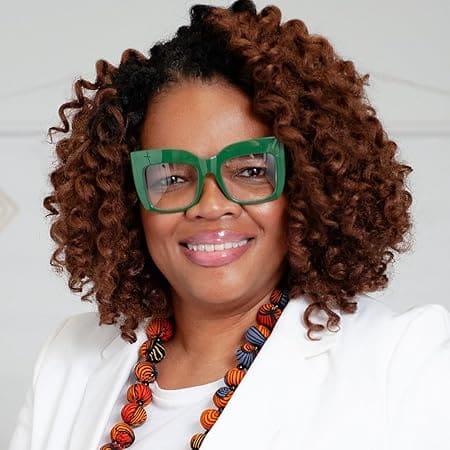
Sherrie Tennessee, Ph.D., is a wellness technology researcher, magazine editor, and founder of SpaSOS. With more than 20 years of experience spanning spa operations, hospitality education, and strategic wellness consulting, she writes for Skin Inc., ISPAs Pulse, and Skin Deep.

Lashelle Ullie is a Beverly Hills-based medical aesthetician specializing in mens skin health and oncology-safe and compromised skin care, collaborating with leading aesthetic practices including Cupid Lips. A contributor to BioMed Magazine, he is known for his integrative, results-driven approach to long-term skin health.

No comments yet. Be the first to comment!


0 Comments