
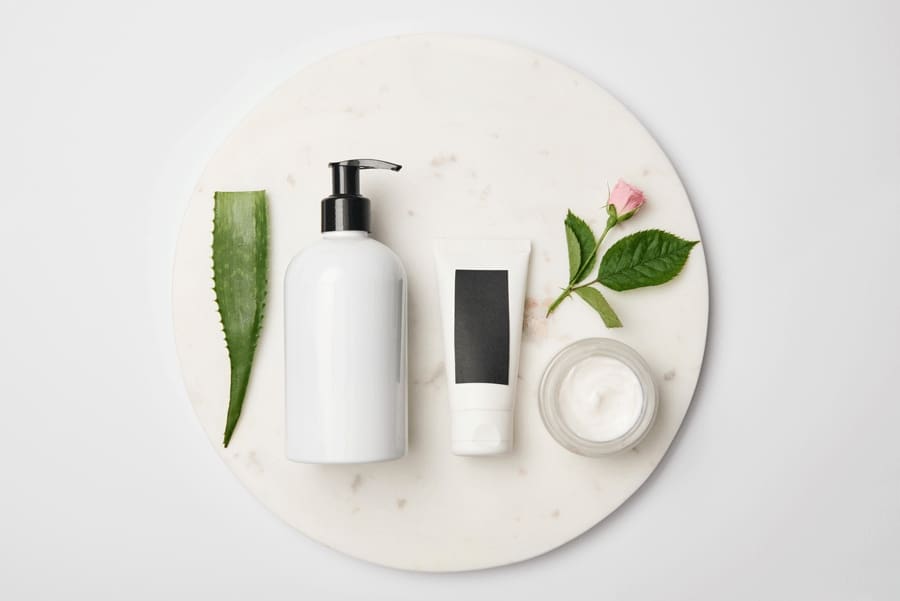
Aloe vera has been used for centuries for its purgative effects, healing abilities, and beauty applications, dating back to biblical times. Six references to aloe vera’s uses can be found in the Bible. Indicators show it’s probably the most applied medicinal plant in the world, being found in cosmetics, medicinal products, and food supplements across the globe.
Aloe vera can be found in many products, from pure 100% aloe vera gel to personal care products such as cleansers, soaps, shaving gels, and lip balm. It is even found infused into facial tissues. Many swear by it for sunburns, scrapes, cuts, bug bites, minor infections, and any other skin ailments that need a soothing salve.
WHERE DOES ALOE COME FROM?
The name aloe vera is derived from the Arabic word “alloeh,” meaning “shining bitter substance,” and “vera,” meaning “true” in Latin. The true botanical name is aloe barbadensis miller, and it belongs to the asphodelaceae (liliaceae) family. It’s a shrubby or arborescent perennial, xerophytic (adapted to an arid environment), succulent that is pea-green in color. It grows mainly in the dry regions of Africa, Asia, Europe, and North America. In India, it is found in Rajasthan, Andhra Pradesh, Gujarat, Maharashtra, and Tamil Nadu.
Aloe vera has been used for medicinal purposes in several cultures for millennia, including Greece, Egypt, India, Mexico, Japan, and China. The Egyptians called it “the plant of immortality.” Queens Nefertiti and Cleopatra used it in their regular beauty regimens. Greek scientists regarded it as the universal panacea 2,000 years ago. Alexander the Great and Christopher Columbus used it to treat soldiers’ wounds. The early 1800s saw it in use as a laxative in the United States. The real turning point in western medicine was when it was used to successfully treat chronic and severe radiation dermatitis in the mid-1930s.
It’s remained a staple in traditional Chinese medicine. Aloe vera juice is used internally to promote healthy function of the stomach, to treat chronic constipation, and also to help with childhood nutritional disorders due to parasites. It’s also incorporated into topical preparations to provide healing effects for the skin.
WHAT MAKES ALOE SO EFFECTIVE?

The gel from this plant contains 75 potentially active constituents including vitamins, enzymes, minerals, sugars, lignin, saponins, salicylic acids, and amino acids. It has been shown to possess anticancer, antioxidant, antimicrobial, antiallergenic, anti-inflammatory, immunomodulatory, hepatoprotective (liver-sparing), antiulcer, and antidiabetic properties.
In order to understand how one plant can be beneficial in such a big way, it’s worth taking a look at what those important constituents can actually do.
Vitamins: Vitamins A (beta-carotene), C, and E are antioxidants, which neutralize free radicals. Aloe vera also contains vitamin B12, folic acid, and choline.
Enzymes: Bradykinase helps to reduce excessive inflammation when applied to the skin topically. Alinase, alkaline phosphatase, amylase, carboxypeptidase, catalase, cellulase, lipase, and peroxidase aid the breakdown of sugars and fats.
Minerals: Minerals like calcium, chromium, copper, selenium, magnesium, manganese, potassium, sodium, and zinc are essential for proper functioning of different enzyme systems in varying metabolic pathways, and some of these are also antioxidants.
Sugars: Aloe provides glucose and fructose (monosaccharides) and polysaccharides such as acemannan and glucomannan. A glycoprotein called alprogen with anti-allergenic properties, along with a novel anti-inflammatory compound (C-glucosyl chromone) was recently isolated.
Anthraquinones: Twelve anthraquinones can be found in aloe vera. These are phenolic compounds, known as laxatives. Aloin and emodin are analgesic (pain relieving), antibacterial, and antiviral.
Fatty Acids: The plant steroids cholesterol, beta-sisosterol, and lupeol have anti-inflammatory action. Lupeol also lends antiseptic and analgesic properties.
Hormones: Auxins and gibberellins help with wound healing and provide anti-inflammatory action.
Aloe vera also provides 20 of the 22 human required amino acids and seven of the eight essential amino acids. It contains salicylic acid that possesses anti-inflammatory and antibacterial properties. The inert substance, lignin, when included in topical preparations, enhances the penetrative effect of the other ingredients into the skin. Saponins, the soapy substances, form about 3% of the gel and have cleansing and antiseptic properties.
PUTTING ALOE TO USE

A multitude of applications for moisturizing and antiaging have been applied. Mucopolysaccharides help to bind moisture into the skin. The stimulation of fibroblasts makes the skin more elastic and less wrinkled. Aloe vera is used to soften skin because of its cohesive effects on the outer layers of epidermal cells. Amino acids soften hardened skin cells and zinc acts as an astringent to tighten pores. Moisturizing effects have been studied in the treatment of dry skin from occupational exposure. Aloe vera gloves have been shown to improve skin integrity, as well as decrease appearance of fine wrinkles and erythema.
Multiple antiseptic agents can be found in aloe, like lupeol, salicylic acid, urea, nitrogen, cinnamic acid, phenols, and sulfur. These all contain antifungal, antibacterial, and antiviral properties. As a result of the antibacterial properties, aloe vera also has an anti-acne effect.
You can easily grow aloe plants on your own and they’ll multiply for you as long as they have good light and drainage. To use, cut off a lower leaf near the central stalk. Cut off the spines along the edge, split the leaf lengthwise, dig out the gel with the point of a knife, and apply it directly to the inflamed, irritated, or burned skin. It will provide fast, soothing relief.

No comments yet. Be the first to comment!























0 Comments